
Knee Health
Understand common knee pain patterns, stiffness, walking and stair symptoms, and how everyday load influences knee function.
Understanding Knee Health
The knee is a major weight-bearing joint that repeatedly bends and straightens during walking, stairs, sitting, and sport. Pain can arise from the kneecap region, joint surfaces, tendons, ligaments, menisci, or surrounding muscles.
A useful first step is to notice where symptoms are felt, which activities reproduce them, whether swelling or instability is present, and how the knee responds after rest.
A Practical Overview
Use this hub to understand how this body area works, how common symptom patterns can differ, what details are useful to notice, and how everyday movement relates to musculoskeletal health.
How The Knee Works
The knee connects the thigh bone to the shin bone and also includes the kneecap, which glides at the front of the joint as the leg bends and straightens. Cartilage, menisci, ligaments, tendons, and surrounding muscles all contribute to stability and movement. Because the knee carries body weight while also changing direction and absorbing load, symptoms can appear during ordinary activities as well as exercise.
Knee comfort depends on more than the joint surfaces alone. Strength in the quadriceps, hamstrings, hips, and calf muscles influences how force is shared during walking, stairs, squatting, and rising from a chair. This is one reason two people with similar activity levels can experience very different knee symptoms.
Common Knee Symptom Patterns
Knee symptoms are often easier to describe when you focus on location and activity. Pain around or behind the kneecap may be more noticeable with stairs, squats, or prolonged sitting. Discomfort along the inside or outside of the knee may follow a twist, repeated loading, or changes in walking or running volume. Stiffness can be most noticeable after rest and then ease as the joint begins moving.
Swelling, locking, catching, or a sense that the knee is giving way provides different information from soreness alone. These features do not identify a diagnosis by themselves, but they are useful details to record because they can help a clinician understand whether the problem is mainly related to irritation, injury, joint mechanics, or another condition.
How Everyday Activity Changes Knee Load
Walking on level ground, descending stairs, running, and deep squatting do not place the same demands on the knee. Greater knee bending generally changes the forces around the kneecap and increases the work required from surrounding muscles. Sudden increases in mileage, hill work, jumping, or repeated stair use can therefore make symptoms more noticeable even when there was no single injury.
Activity-related discomfort does not always mean that movement is harmful. In many musculoskeletal problems, the useful question is whether symptoms remain mild and settle after activity or continue to build, alter walking, or interfere with normal function. Gradual progression and recovery time are important parts of how the knee adapts to load.
What To Notice When Your Knee Hurts
Useful observations include where the discomfort begins, whether it is sharp or aching, how long it lasts, and whether swelling appears. Also notice if symptoms occur during the activity, immediately afterward, or only after sitting or sleeping. Comparing flat walking with stairs, hills, squats, and standing from a chair can reveal which movements are most provocative.
Changes in function matter as much as pain intensity. Difficulty fully straightening the knee, inability to bear weight, repeated buckling, or a new loss of motion deserves more attention than a brief mild ache that resolves quickly.
Supporting Knee Health Over Time
Regular movement, progressive leg strength, adequate recovery, and sensible changes in activity volume can help maintain knee function. Exercises that strengthen the thigh and hip muscles are commonly used in rehabilitation because these muscles help control the leg during walking, stairs, and sport. The exact exercise plan should match a person’s health status and symptoms.
Body weight, footwear, training surfaces, previous injuries, sleep, and overall fitness can also influence how the knee responds to repeated load. There is rarely one habit that determines knee health, so it is more useful to think in terms of consistent movement, strength, recovery, and early attention to meaningful changes in function.
When Professional Assessment Is Worth Considering
Professional evaluation is appropriate when knee pain persists, repeatedly limits daily activity, follows a significant injury, or is accompanied by major swelling, deformity, locking, instability, or inability to bear weight. Symptoms that steadily worsen instead of improving with reasonable activity modification also deserve assessment.
A clinician can combine the symptom history with a physical examination and, when appropriate, imaging or other tests. That process is more reliable than trying to identify a condition from one symptom or one movement alone.
Explore Knee Health Articles
Start with three focused guides that explain common symptom patterns in clear, evidence-informed language.
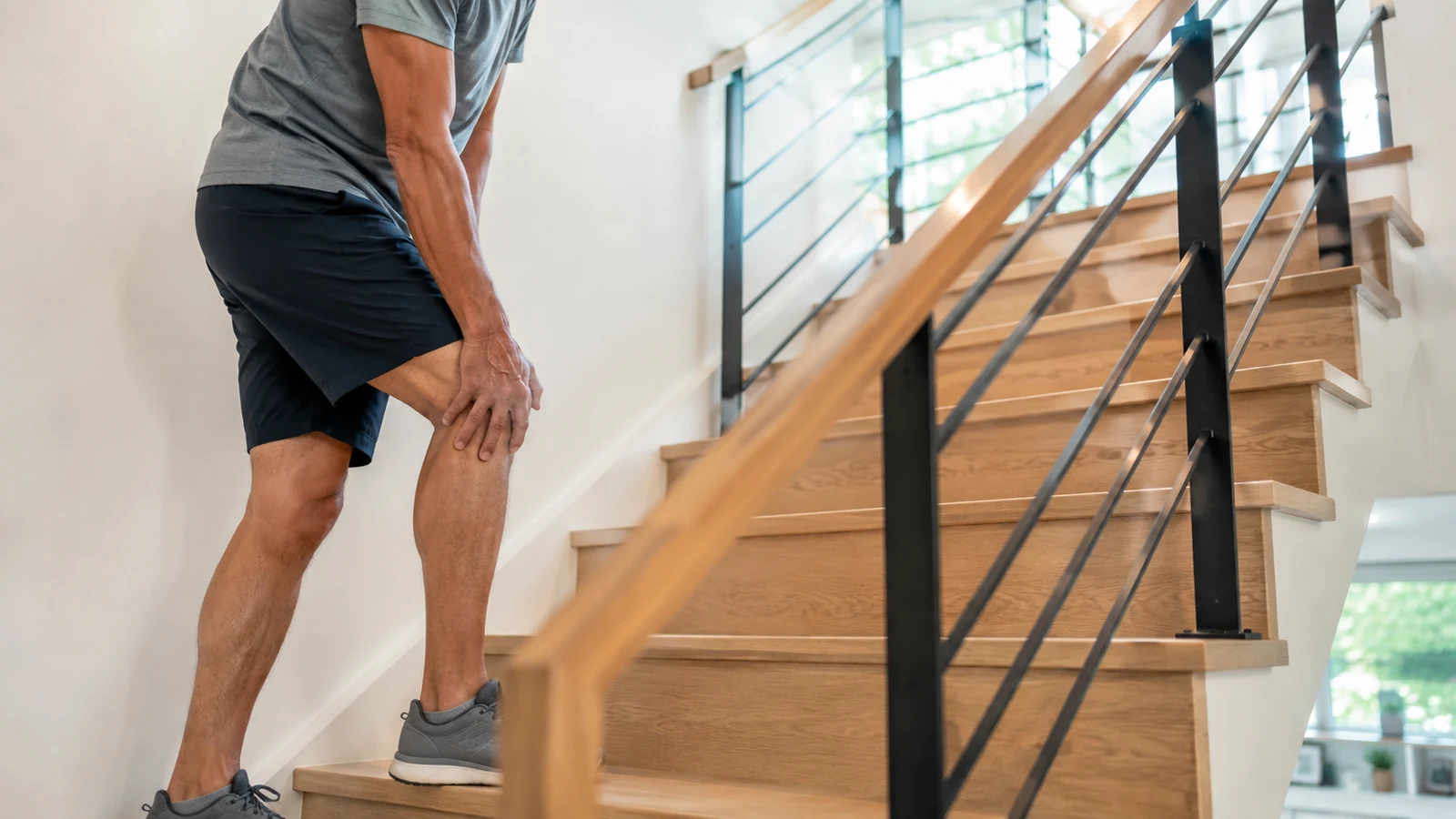
Why Does My Knee Hurt When Climbing Stairs?
Learn why knee discomfort may appear on stairs and what movement patterns can contribute.

Why Does My Knee Hurt After Walking?
Explore common reasons knee pain may appear after walking and when to seek assessment.

What Is Runner’s Knee?
Understand patellofemoral pain, common triggers, symptoms, and recovery considerations.
Frequently Asked Questions About Knee Health
Why Can Knee Pain Feel Different On Stairs Than On Flat Ground?
Stairs increase the amount of knee bending and change the load around the kneecap and surrounding tissues, so symptoms may appear even when flat walking feels comfortable.
Does Knee Stiffness Always Mean Arthritis?
No. Arthritis can cause stiffness, but inactivity, overuse, injury, and other conditions can produce similar symptoms.
When Should Knee Pain Be Assessed?
Seek evaluation for persistent pain, major swelling, locking, giving way, inability to bear weight, or symptoms after significant injury.
Medical Sources And References
This topic hub is informed by established medical guidance. Named clinicians below are credited only because the original medical publisher identifies them as contributors or peer reviewers.
- AAOS: OsteoarthritisContributed and/or updated by Neil P. Sheth, MD, FAAOS; peer-reviewed by Thomas Ward Throckmorton, MD, FAAOS.
- MedlinePlus: Bones, Joints And MusclesOfficial patient education resource used as background for the anatomy, symptom-pattern, and general health information on this hub.