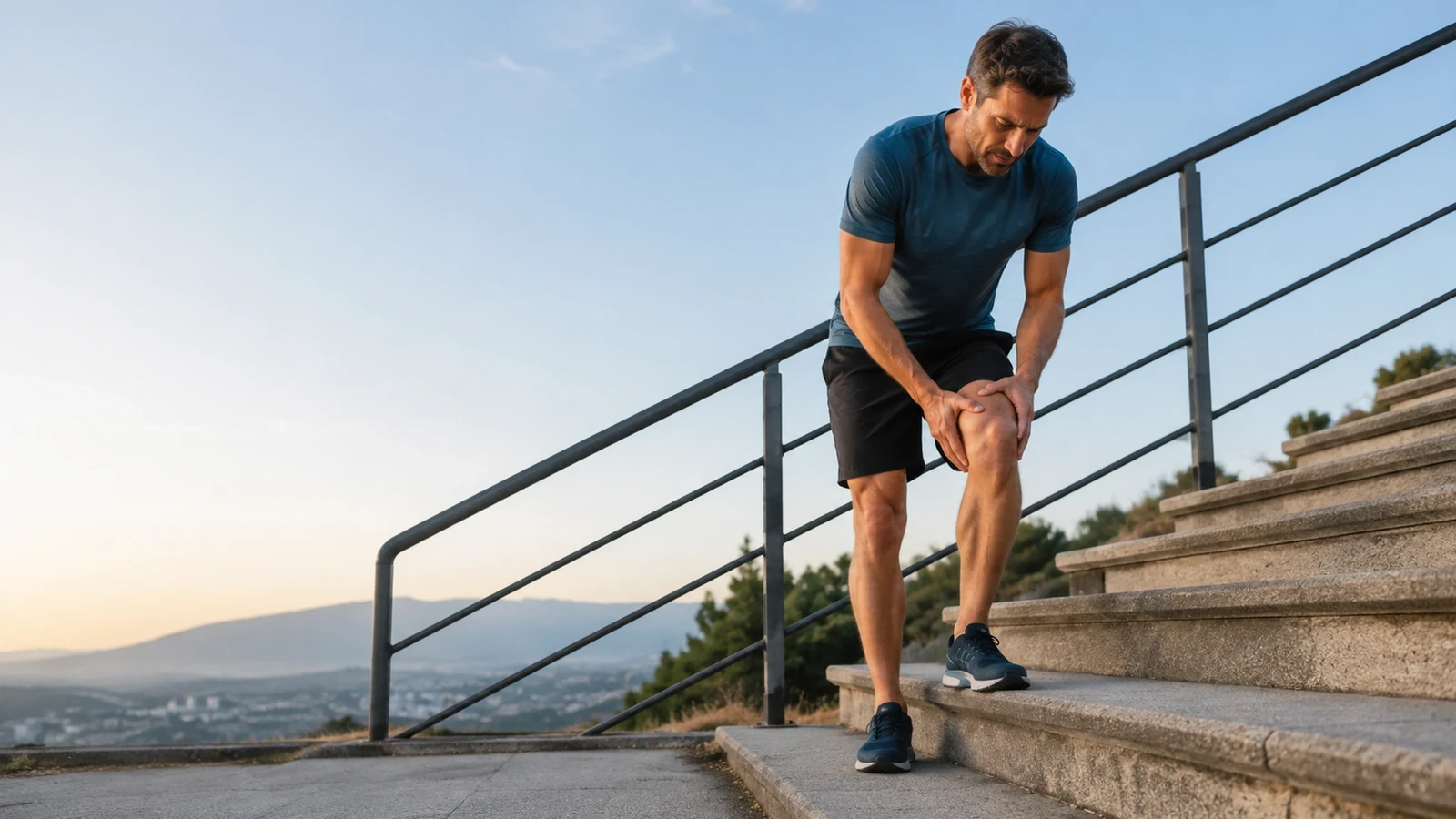
Knee discomfort on stairs is common because climbing and descending increase the demand placed on the joint, particularly around the kneecap. The location, timing, and pattern of symptoms can offer useful clues, but persistent or severe pain should be assessed by a qualified healthcare professional.
What To Know
- Stairs increase the demand on the knee, which can make pain around the kneecap more noticeable than level walking.
- Pain location, swelling, instability, and recent changes in activity provide useful clues but do not establish a diagnosis on their own.
- Severe, worsening, trauma-related, locking, giving-way, or weight-bearing symptoms should be medically evaluated.
Why Stairs Can Make Knee Pain More Noticeable
Going up or down stairs requires repeated knee bending while the thigh muscles control body weight. This increases force across the front of the knee compared with level walking. Patellofemoral pain is one common reason people notice aching around or behind the kneecap during stairs, squatting, running, or after sitting with the knee bent for a long time.
Common Patterns To Notice
Pay attention to whether discomfort is in front of the kneecap, along the joint line, behind the knee, or associated with swelling. Also note whether symptoms began after a sudden increase in training, a new activity, or an injury. These details can help a clinician narrow the possible causes.
Related reading: Why Does My Knee Hurt After Walking?
Activity And Movement Considerations
A temporary reduction in activities that clearly aggravate symptoms may be reasonable while monitoring how the knee responds. Gradual return to activity, appropriate strength work, and attention to training volume are common parts of conservative management plans, but the right approach depends on the cause and the individual.
When To Seek Medical Evaluation
Seek professional assessment when pain is severe, worsening, associated with major swelling, follows a significant injury, causes the knee to give way or lock, or makes normal weight-bearing difficult. Persistent symptoms that do not improve also deserve evaluation.
Questions To Bring To An Appointment
Useful details include when the pain started, the exact location, which movements provoke it, whether there is swelling or instability, and whether activity levels recently changed. Bringing a concise symptom history can make an appointment more productive.
Frequently Asked Questions
Can Patellofemoral Pain Hurt On Stairs?
Yes. Patellofemoral pain commonly becomes noticeable during activities that repeatedly bend the knee, including climbing stairs.
Should I Stop All Exercise If My Knee Hurts?
Not necessarily. The appropriate level of activity depends on symptom severity and the cause. Avoid pushing through significant pain and seek individualized guidance when symptoms persist.
Is Knee Pain On Stairs Always Arthritis?
No. Several conditions can cause pain on stairs, including patellofemoral pain, overuse problems, injury, and arthritis. A clinician can help distinguish among them.
Medical Sources And References
This guide was developed from established medical guidance and reference material. Source clinicians are credited according to the attribution shown by the original publisher.
- AAOS: Patellofemoral Pain Syndrome Source/Contributed by Jocelyn Ross Witstein, MD, FAAOS; Mary K. Mulcahey, MD, FAAOS; Carolyn M. Hettrich, MD, MPH, FAAOS; and Daniel Liechti, MD. Peer-reviewed by Stuart J. Fischer, MD, FAAOS, and Rick Wilkerson, DO, FAAOS.
- AAOS: Patellofemoral Arthritis Source/Contributed by Neil P. Sheth, MD, FAAOS; peer-reviewed by Mary K. Mulcahey, MD, FAAOS.